
"banana exports"
1000 article(s) found

San Román Costa Rica, Costa Rica
Other types of Brazilian coffee, such as Rio, Parana, etc., can be produced in large quantities without too much care. Although the taste is rough, it is a kind of inexpensive coffee. Because it is distributed all over the country, the solid quality varies, and there are its own standards (NO.2~NO.8 according to the amount of impurities, NO.13~NO.19 according to the size of beans, divided into six grades according to taste).

Introduction to the Flavor characteristics of Orosi / Eurosi Orosi Coffee in Costa Rica Coffee producing area
Professional coffee knowledge exchange more coffee bean information please follow the coffee workshop (Wechat official account cafe_style) History Costa Rica is the first country in Central America to grow coffee and bananas because of its fertile and well-drained volcanic soil. Coffee and bananas are the country's main exports. In 1729, coffee was introduced into Costa Rica from Cuba.

Introduction of Fine Coffee beans in Coffee Flavor and Taste production area of Fire Phoenix Manor in Costa Rica
With regard to the coffee bean-related industry, Colombians say that coffee has changed the country and enjoyed a rich environment, and coffee has indeed made an outstanding contribution. Although the land area of Colombia ranks third from the bottom of Central America, its economic environment is better than that of half of the countries. due to the affluence of the people, social stability, and spare capacity to care about environmental issues, there are more than 30 national parks in Colombia. 1729

Costa Rica Goddess Manor Coffee Production Variety Fine Coffee Bean Flavor Description
Other types of Brazilian coffee, such as Rio, Parana, etc., can be produced in large quantities without too much care. Although the taste is rough, it is a kind of inexpensive coffee. Because it is distributed all over the country, the solid quality varies, and there are its own standards (NO.2~NO.8 according to the amount of impurities, NO.13~NO.19 according to the size of beans, divided into six grades according to taste).
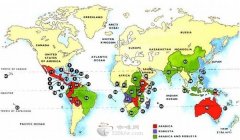
Introduction of Coffee from 10 Coffee producers in the World
one. Costa Rican coffee has full grains, ideal acidity and unique strong aroma. Tarrazu of Costa Rica is one of the major coffee producing areas in the world. Costa Rica, with its fertile volcanic soil and good drainage, is the first country in Central America to grow coffee and bananas for commercial value. Coffee and fragrance

A brief introduction to the historical development of coffee background in Diamond Hill Manor in Costa Rica
Tarrazu in Costa Rica is one of the major coffee producing areas in the world. The coffee produced is light and pure in flavor and pleasant in aroma. Costa Rica, with its fertile volcanic soil and good drainage, is the first country in Central America to grow coffee and bananas for commercial value. Coffee and bananas are the country's main exports. In 1729, coffee was introduced from Cuba to Goth.

One of the major coffee producers in the world, Costa Rica Tarasu coffee beans, central Costa Rica.
Costa Rican Coffee-Tarrazu in Costa Rica is one of the major coffee producers in the world, with a light and pleasant flavor. Costa Rica, with its fertile volcanic soil and good drainage, is the first country in Central America to grow coffee and bananas for commercial value. Coffee and bananas are the country's main exports. 1729

Light and pure flavor of Costa Rican coffee beans introduce the flavor of Costa Rican coffee
Tarrazu in Costa Rica is one of the major coffee producing areas in the world. The coffee produced is light and pure in flavor and pleasant in aroma. Costa Rica, with its fertile volcanic soil and good drainage, is the first country in Central America to grow coffee and bananas for commercial value. Coffee and bananas are the country's main exports. In 1729, coffee was introduced from Cuba to Goth.

Introduction to the flavor and taste characteristics of Costa Rican St. Roman Manor Coffee
Costa Rica is located in the Central American isthmus, belonging to North America, 10 north latitude, 84 west longitude. It is bordered by the Caribbean Sea to the east and the North Pacific Ocean to the west, with a coastline of 1290 km (212km on the east coast and 1016 km on the west coast). Costa Rica borders Nicaragua in the north (309 km long border) and Panama (639 km long border) south-southeast. Total

The Cultural course of Coffee beans in Costa Rica
Tarrazu in Costa Rica is one of the major coffee producing areas in the world. The coffee produced is light and pure in flavor and pleasant in aroma. Costa Rica, with its fertile volcanic soil and good drainage, is the first country in Central America to grow coffee and bananas for commercial value. Coffee and bananas are the country's main exports. In 1729, coffee was introduced from Cuba to Goth.

Boutique coffee recommends Costa Rican coffee
Coffee was introduced into Costarica from Cuba in 1729. Today, its coffee industry is one of the most well-organized industries in the world. Costa Rica, with its fertile volcanic soil and good drainage, is the first country in Central America to grow coffee and bananas for commercial value. Coffee and bananas are the country's main exports. Coffee from Costa Rica

A global coffee producer in Costa Rica.
Coffee was introduced into Costarica from Cuba in 1729. Today, its coffee industry is one of the most well-organized industries in the world. Costa Rica, with its fertile volcanic soil and good drainage, is the first country in Central America to grow coffee and bananas for commercial value. Coffee and bananas are the country's main exports. Coffee from Costa Rica

An introduction to the flavor and taste characteristics of the coffee producing area of Costa Rica's Saint Roman Coffee Manor.
Costa Rica is located in the Central American isthmus, belonging to North America, 10 north latitude, 84 west longitude. It is bordered by the Caribbean Sea to the east and the North Pacific Ocean to the west, with a coastline of 1290 km (212km on the east coast and 1016 km on the west coast). Costa Rica borders Nicaragua in the north (309 km long border) and Panama (639 km long border) south-southeast. Total

A brief introduction to the History and Culture of the Origin and Development of Costa Rican Yerzaro Fine Coffee beans
The newly developed villa sarchi planting, breeding and quality inspection research institutions, in addition, it also has 10 hectares of experimental plots, planting a number of excellent varieties. Coffee is Costa Rica's main agricultural product, with an annual output of more than 2 million bags (60 kilograms) and foreign exchange earnings of 250 million US dollars, second only to pineapples and bananas. All the coffee trees planted in Costa Rica are Arabica coffee trees.

The best frying degree of Costa Rican coffee
Because if you buy ground coffee powder in a store, I'm afraid the coffee will deteriorate if you buy too much. Therefore, it is better to buy coffee beans. The method of grinding coffee beans will choose different grinding methods depending on the different coffee utensils used, usually medium to very fine grinding is more suitable. The amount of coffee powder varies according to personal preference, usually about 8 to 10 grams, and if you want coffee flavor

Introduction of Coffee Flavor and taste in Costa Rican Goddess Manor
Costa Rica is located in the Central American isthmus, belonging to North America, 10 north latitude, 84 west longitude. It is bordered by the Caribbean Sea to the east and the North Pacific Ocean to the west, with a coastline of 1290 km (212km on the east coast and 1016 km on the west coast). Costa Rica borders Nicaragua in the north (309 km long border) and Panama (639 km long border) south-southeast. Total

Costa Rican coffee. Costa Rican coffee producing area.
Coffee was introduced into Costarica from Cuba in 1729. Today, its coffee industry is one of the most well-organized industries in the world. Costa Rica, with its fertile volcanic soil and good drainage, is the first country in Central America to grow coffee and bananas for commercial value. Coffee and bananas are the country's main exports. Coffee from Costa Rica

Introduction to excellent varieties of Costa Rican Coffee Flavor and Flavor Manor
The terrain of Cocos Island is rugged, and in the miraculous craftsmanship of nature, there are a variety of reefs, waterfalls, steep cliffs and labyrinthine underground holes everywhere. The underwater world of Cocos Island is recognized as the best place in the world to watch pelagic life. The transparent blue sea is full of marine life, such as sharks, rays, tuna and dolphins.

Costa Rican coffee the characteristics of Costa Rican coffee
Coffee was introduced into Costarica from Cuba in 1729. Today, its coffee industry is one of the most well-organized industries in the world. Costa Rica, with its fertile volcanic soil and good drainage, is the first country in Central America to grow coffee and bananas for commercial value. Coffee and bananas are the country's main exports. Coffee from Costa Rica

Global Coffee producing area-Costa Rica Coffee Market
Coffee was introduced into Costarica from Cuba in 1729. Today, its coffee industry is one of the most well-organized industries in the world. Costa Rica, with its fertile volcanic soil and good drainage, is the first country in Central America to grow coffee and bananas for commercial value. Coffee and bananas are the country's main exports. Coffee from Costa Rica